Real-Life Stories: Margaret Arach Orech

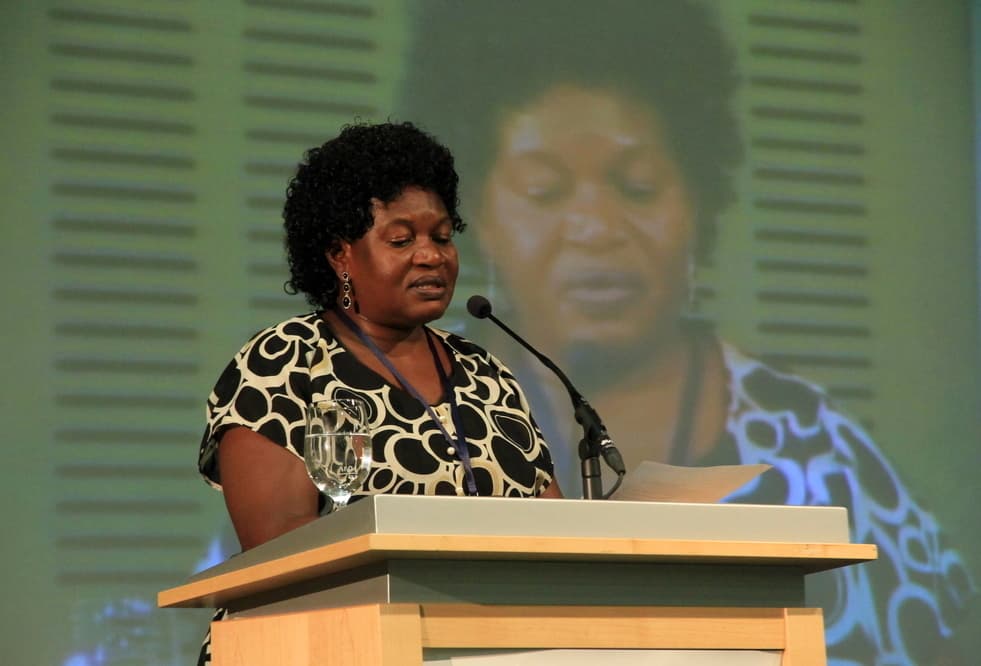
On December 22, 1998, Margaret was traveling from Kitgum to Kampala to spend the Christmas holiday with her family and children. At the time, civil war cast a shadow over daily life in Uganda. That day Margaret lost her leg — but it also marked the beginning of her lifelong journey with the International Campaign to Ban Landmines.
Before the incident “It wasn't actually anything I was concerned about at all. But that changed immediately after I got injured. The two months I was hospitalized, I had a lot of thinking. It's like I was wondering: how am I going to do this? How am I going to get around this? But that wasn't the hardest part. The hardest was how the community and my friend would view me.”
The Explosion
Despite military warnings to delay travel until the roads were cleared, the driver of Margaret’s public van, eager to complete holiday trips, set off anyway.
“I didn’t know about it, but I got to know about it after the incident happened.”
Fifteen minutes into the journey, the vehicle hit a landmine. The blast tore through the van, taking Margaret’s leg instantly — a sensation she didn’t even feel at first.
“I thought we had lost the tire, but actually, the explosion had taken off my leg.”
As chaos erupted and bullets rained from rebels hidden near a sharp bend, passengers scrambled. She tried to follow but found herself incapable of running, hopping on one leg until she could throw herself into the bush to hide. A rebel found her checking whether she was alive, but she played dead to save her life.
Margaret narrowly escaped being burned alive when the rebels set the van ablaze. Thrown far enough into a cotton field, she was saved by the green plants that halted the fire’s spread. Then the national army arrived, and she was rescue.
From Recovery to Advocacy
She was taken to a looted health centre — no beds, no supplies, just a floor and bandages torn from household sheets. The wound dressing, done without anaesthesia, left her screaming. After she was transferred to another hospital, where she stayed for two months. It was during recovery that she found hope in the pages of her Bible.
“I was reading the book of Isaiah 43… ‘Do not dwell on the past. See, I’m doing a new thing.’ I took it literally as a message for me.”
That very day, social workers arrived seeking a female landmine survivor who could represent Uganda at an international conference. Within a week, Margaret was flown to Zimbabwe, where she met global survivors. This marked the start of her transformation from victim to advocate. She joined the International Campaign to Ban Landmines, participated in global conferences, and wrote letters to governments urging action against these atrocious weapons.
But first, she returned to the St. Mary’s hospital to comfort other amputees, offering peer support to those who, like her, had lost so much. Margaret became a voice for the voiceless:
“Disability gave me a voice. Disability also opened my eyes. And it also opened my heart. And then the human being in me came out.”
Her Advocacy Journey From 1999 Until Today
In September 1999, Margaret spoke at the First Meeting of States Parties of the Mine Ban Treaty in Geneva — a mere nine months after her ambush. Today, she continues to serve as a voice for landmine survivors acting as ICBL ambassador.
For survivors of landmines, like Margaret, the Mine Ban Treaty is more than ink on paper. It represents lives saved, land restored, communities healed, and years of relentless advocacy. The news that some state parties are considering withdrawal is not only shocking, but also deeply personal.
“These people who are withdrawing, they know too well what those weapons do. These are not nations unaware of the devastation mines cause. They are states that have sat in the same rooms as survivors and deminers. They have heard the testimonies, seen the prosthetics, read the casualty statistics. They have listened to testimonies from the survivors... and yet they are willing to undo all those years of hard work.”
This regression, she warns, doesn’t just threaten the credibility of the Treaty. It risks lives. Landmines don’t disappear on their own. Removing them is expensive, dangerous, and slow — and the human cost never fades.